
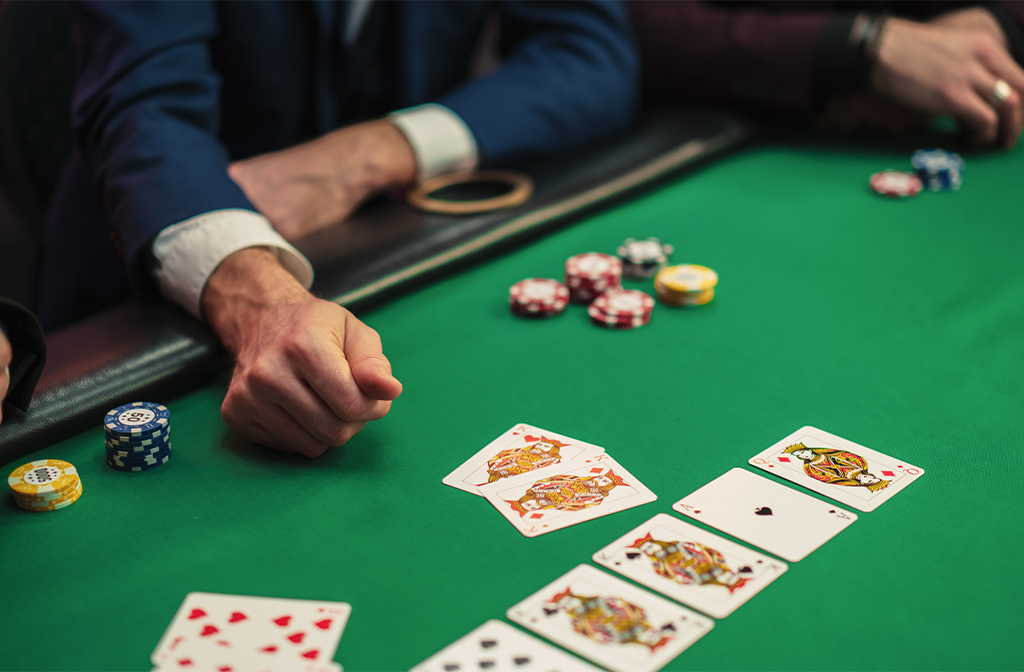
Reading opponents is one of the most advanced and profitable skills a serious poker player can develop. In live play and online games, the ability to interpret physical cues, betting patterns, timing, and psychological signals distinguishes consistent winners from break-even players. This article, How to Read Opponents in Poker: Mastering the Poker Face, explores evidence-based techniques, real-world drills, and strategic frameworks that go well beyond surface-level tells, giving you a practical roadmap to make better decisions at the table.
Why reading opponents matters and what it really predicts
Reading an opponent is not about guessing a single card; it is about estimating a range of hands and using that estimate to make higher expected value decisions. Effective reads change how you size bets, when you bluff, and when you fold. Good readers combine observable behavior with contextual logic to produce probabilistic judgments that improve long-term results.
The difference between tells and ranges
- Tells are specific actions or physical signals that may correlate with certain hand strengths. They are noisy and rarely decisive on their own.
- Ranges are collections of hands an opponent could plausibly hold given preflop action, position, and stack sizes. Reading ranges is a cognitive process grounded in game theory; tells are input data that adjust those ranges.
Treat tells as modifiers to range estimation rather than binary signals that determine action.
The foundation: situational and baseline analysis
Reading opponents should start with establishing a baseline and context. Without a baseline, any deviation looks like a tell even if it is normal for that player.
Establish a baseline
- Observation period: Spend at least a few orbits watching a player before acting aggressively. Note how they behave when folding, calling, and winning.
- Speech and mannerisms: How talkative are they? Do they joke when winning or go quiet?
- Timing patterns: Do they act quickly or thoughtfully across all situations? Timing differences matter more when compared to the baseline.
- Bet sizing and frequency: What sizes do they use to bluff, value bet, or thin the field?
Context to consider
- Game type and stakes: Behavior in a $1/$2 cash game differs from a high-stakes tournament bubble. Pressure changes tells.
- Table dynamics: Are players aggressive, passive, or observant? Social tables produce different reading opportunities than anonymous, hyper-aggressive tables.
- Player history: Past showdowns reveal genuine tendencies. If you have history with a player, use it.
Verbal and social cues: what players say and how they say it
Table talk provides clues when read carefully.
Classic verbal patterns
- Over-explaining a hand often signals weakness or an attempt to justify a marginal action.
- Sudden interest in chips or the count when a big pot appears can be a stress reaction indicating strength.
- Silence or terseness from usually talkative players may signal focus and strength.
How to use table talk ethically and effectively
- Ask neutral questions that reveal information indirectly, such as “How long have you been playing here?” rather than direct queries about cards.
- Avoid baiting or intentionally deceiving players with verbal tricks that might violate house rules or ethical norms. Use information, not manipulation, to make decisions.
Physical tells: reliable signs and how to interpret them
Physical tells are useful, but their value increases with consistency and cross-validation.
Common reliable tells and what they often mean
- Micro-expressions: A fleeting smile or flinch can indicate immediate emotional reaction to a win or loss. These are brief and require focus to catch.
- Breathing changes: Slower, deeper breathing can indicate relaxation and strength; shallow, rapid breathing may signal anxiety.
- Chip handling: Confident, smooth stacking usually indicates comfort; shaky or hesitant chip movement can mean nervousness.
- Eye contact: Avoiding eye contact after a big bet may suggest guilt or discomfort, while deliberate eye contact can be intimidation or confidence.
- Posture shift: Leaning forward indicates engagement and possible strength; retreating or slouching may indicate weakness or disinterest.
False positives and cultural differences
- Be aware of cultural or individual differences: some players naturally avoid eye contact, while others always play with expressionless faces. Never interpret a single cue in isolation.
Timing tells: slow and fast play insights
Timing is a powerful, often underrated input. In many cases it is more reliable than a facial tic.
Interpreting time taken to act
- Quick call, quick fold: Fast, routine decisions usually follow simple equity-based choices.
- Instant all-in or jam: Can be polarizing; strong hands and bluffs both sometimes move quickly to remove decision time. Use other information to disambiguate.
- Long hesitation then raise: Often indicates constructed action, likely a bluff or thin value bet.
- Consistent slow play on big pots: Could indicate genuine calculation because stakes are large; look for pattern consistency.
Online timing tells
- Instant check/call often means marginal hands or automated responses; long deliberate clicks suggest thoughtful decisions or multi-street planning. Use hand history and betting patterns to validate online timing reads.
Betting patterns: the highest signal-to-noise ratio
Betting patterns carry the most direct strategic information because they connect to incentives and pot equity.
Types of betting patterns and what they imply
- Small continuation bet on dry boards often represents a bluff or probe bet.
- Large bet on coordinated boards suggests strong hands, especially when used by players who rarely overbet.
- Check-raise frequency indicates aggression and ability to represent strength. Frequent check-raisers may bluff to seize pot control.
- Overbetting on river is polarized: it commonly represents very strong hands or bluffs. Understanding the player’s range narrows which it is.
How to decode patterns
- Track how often a player continuation bets, folds to raises, floats, or thins the field. Maintain mental buckets such as “sticky caller,” “lethal bluffer,” or “tight aggregator.” Use these buckets to make decisions rather than raw guesses.
Behavioral dynamics across different formats
Opponent reading differs across cash games, tournaments, and sit-and-gos.
Cash games
- Players can rebuy and leave, so they often exhibit looser, experimental behavior. Bluffs may be more common with deeper stacks.
Tournaments
- Pressure points like antes, blinds, and bubble play create predictable shifts in behavior. Players tighten near the bubble and become more reckless near pay jumps.
Heads-up play
- Everything is amplified. Small changes in behavior carry larger weight. In heads-up, mixing aggression with reading skills and exploitative adjustments wins quickly.
Online vs live tells: what carries over and what does not
Online and live poker share strategic fundamentals, but the reading toolbox changes.
Live-only cues
- Facial micro-expressions, posture, breathing, and chip handling.
- Voice inflection and table talk.
Online-only cues
- Timing patterns, bet sizing tendencies, chat behavior, and HUD statistics.
- Mouse movement and multi-tabling behaviors sometimes reveal inattention or automation.
Translating live skills online
- Convert physical-read habits into behavioral pattern recognition: opening ranges, postflop continuations, and reaction to aggression. Keep extensive session notes to track trends.
Advanced reading: combining multiple signals and Bayesian thinking
Reading opponents becomes powerful when you combine signals and update your beliefs incrementally.
Bayesian updating in practice
- Start with a prior range based on preflop action. Each new piece of evidence – a bet size, a timing change, or a phrase – adjusts the probability of opponent holdings. Continually update and refine until a decision threshold is met.
Cross-validating signals
- Look for multiple converging cues: timing + bet size + baseline deviation. The more independent signals align, the higher your confidence in the read.
How to train your reading ability: drills and exercises
Improvement requires deliberate practice and feedback.
Live drills
- Observation-only sessions: Sit in, do not play for a while. Record behaviors and outcomes. Later compare your notes to actual showdowns.
- Note-taking: Use shorthand to log actions, sizes, and timing patterns. Review notes between sessions.
- Partner drills: Work with a trusted friend who shows hands post-session; practice reading them and getting immediate feedback.
Online drills
- Hand history review: Use a HUD if allowed and track deviations from baseline to see which reads would have been predictive.
- Replay and pause: Watch large pots on video or replays and predict actions before revealing the showdown.
Ethical boundaries and practical cautions
Reading opponents is part of the game, but there are ethical and practical limits.
Respect privacy and table rules
- Do not use hidden cameras, recording devices, or electronic aids where prohibited.
- Avoid aggressive or personal psychological tactics that may cross ethical lines or get you ejected.
Beware of overconfidence
- Never act on a single tell in isolation. Overconfident misreads are expensive. When in doubt, favor math and pot equity.
Real-life examples: applied reads and decisions
Example 1: A normally talkative player goes silent and pauses significantly before betting large on a wet board. You have top pair. Interpretation: The silence deviates from baseline and the long pause may indicate careful value-betting. Tighten your calling range and consider a smaller probe bet to extract value while avoiding being outdrawn or bluffed.
Example 2: An online player instantly jams all-in on the river after a blocker-heavy board. They often perform automatic shoves with both very strong hands and rarely with bluffs. Use their preflop aggression stat and frequency of fold-to-river-shove to decide whether to call.
Practical checklist: a decision flow for reads at the table
- Establish baseline within first few orbits.
- Determine the likely range from preflop action and position.
- Observe deviations – timing, verbal cues, bet sizing.
- Cross-validate signals: at least two independent cues align.
- Update your probability estimate and apply pot odds / EV calculations.
- Make the decision and log the outcome for future learning.
FAQ
How can I practice reading opponents without disrupting the game?
Observe quietly for full orbits before entering pots. Take mental or brief written notes between hands. You can also play passive small pots to test reads without risking large amounts.
Can reading opponents replace studying math and strategy?
No. Reading opponents complements math and strategy. Accurate reads improve decision-making, but mathematical fundamentals determine whether a play is profitable in the long run.
Is it legal to record live poker sessions to study tells later?
Rules vary by venue. Many casinos prohibit unauthorized recording. Always check house rules and obtain permission before recording. In private home games, get consent from all players.
How reliable are tells when players know you are watching them?
Once players realize they are being observed, they may change behavior deliberately to mislead. Expect counter-tells in those cases and rely more on range analysis and past showdown data.
What role do HUDs and software play in modern poker reading?
In online play, HUDs provide statistical reads that are highly useful. However, they are supplements, not replacements for dynamic judgment. Also respect site rules about permitted tools.
How do I avoid confirmation bias when interpreting tells?
Actively attempt to disprove your hypothesis. Ask yourself what alternative hands explain the signals. Use objective metrics like bet sizing and pot odds rather than narrative-driven assumptions.
When should I stop trying to read an opponent and rely on math?
When you lack sufficient baseline data or when multiple independent cues contradict each other. In large pots where variance is high, default to mathematically justified plays unless you have strong, validated reads.
Mastering the poker face means more than hiding your own emotions. It means learning to observe, quantify, and integrate opponent behavior with rigorous range analysis and probabilistic thinking. With disciplined practice and ethical application, reading opponents becomes a skill that turns ambiguous situations into measurable, exploitable advantages at the table.